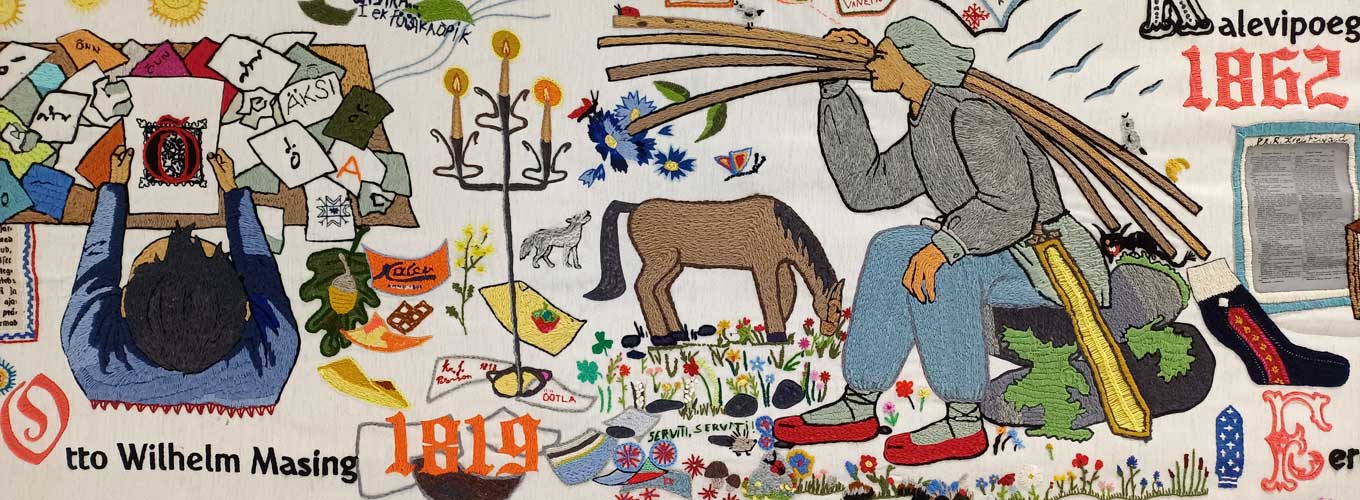
The exhibition opens on 18 April in the Estonian National Museum.
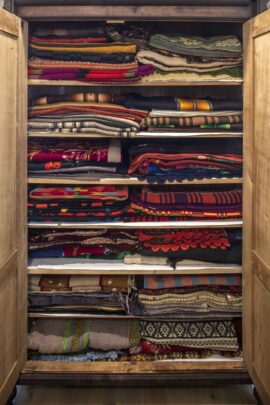
A rug is not only a practical textile, but also a work of art and a bearer of memory. Among the Estonian National Museum’s collection of more than 3,000 rugs, carpets and tapestries are many that speak not only through their patterns and materials, but also through the story of their creation. In Estonia, the making of rugs, carpets and tapestries is both a traditional handicraft and a communal activity that sustains and strengthens skills, everyday ties and a sense of belonging.
This exhibition brings together two separate bodies of work, made in different periods but animated by the same spirit. The first is the pictorial masterwork The Year of the Book Tapestry, embroidered in 48 locations across Estonia. It travelled more than 3,600 kilometres, and its logbook contains 2,917 signed entries. The idea and initiative behind the work came from Mart Jagomägi, and the design was created by students in the Textile Department of the Pallas University of Applied Sciences.
The museum’s collection includes 134 rugs made collectively or during communal work gatherings. On display are 100 patchwork pieces created for the 100th anniversary of the Republic of Estonia. The idea grew out of cooperation between the Meieselts Meroos society in Meremäe and the Vastseliina Handicraft Association: to create a gift worthy of Estonia. From this came the idea for 100 patchwork works. Clubs, schools, local communities and individual creators from across the country all took part in making them.
What connects these two undertakings is the idea of collective work. Like the handicraft evenings once held in village life, every stitch and piece of fabric carries the hand of the maker, the place they call home, and their vision of Estonia.