Overview
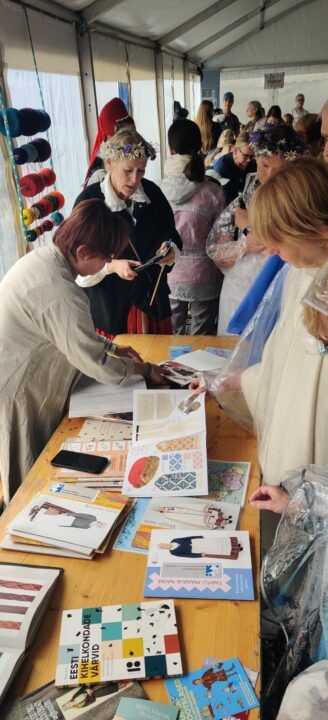
Alongside academic research, ERM’s scholarly activity is also significantly connected with professional science communication, outreach, and advisory work. The ERM Folk Culture Training and Information Centre, which operates as a subunit of the Research Department, aims to preserve and value cultural heritage and to support its use and interpretation. The centre’s main outputs are research-based consultation; the development of training programmes (including online thematic introductions and object presentations, as well as e-guides); the documentation of heritage skills and making them available online; the organisation of the Folk Costume School, training courses, seminars, lectures, and workshops; the preparation of popular scholarly publications on folk culture; exhibition activities; and research into the use of cultural heritage.
The centre works closely with other institutions active in the field, including the Viljandi Culture Academy of the University of Tartu, the Estonian Centre for Folk Culture, the Estonian Folk Art and Craft Union, the NGO Folk Costume, the Estonian Song and Dance Celebration Foundation, and others. The centre also engages in international cooperation, offering consultations and, where necessary, supervision of research work both in Estonia and internationally.
The centre is involved in academic research projects both by contributing to research and by developing applied outputs, participating in the preparation of publications, the development of practical activities, and the identification of outputs and dissemination platforms, including digital resources. This close integration ensures that the information centre applies the results of the museum’s latest academic research, broadens its thematic expertise, and thereby responds better to the expectations and needs of the museum’s wider target groups.
Workshops
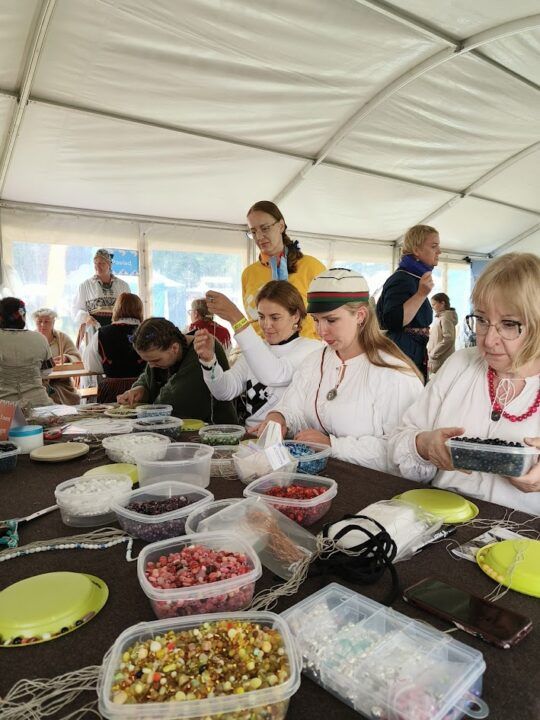
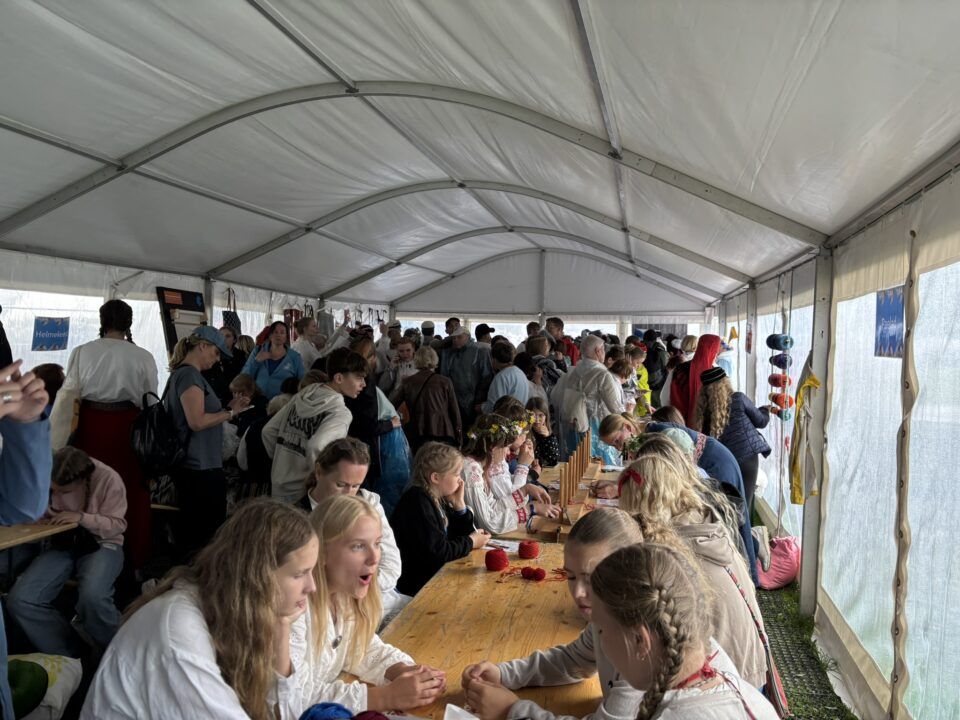
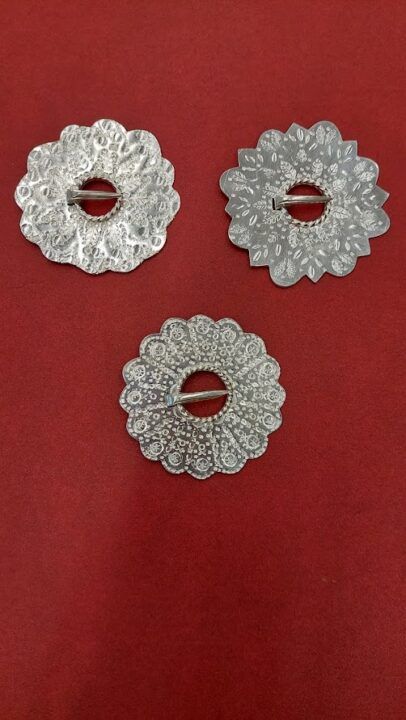
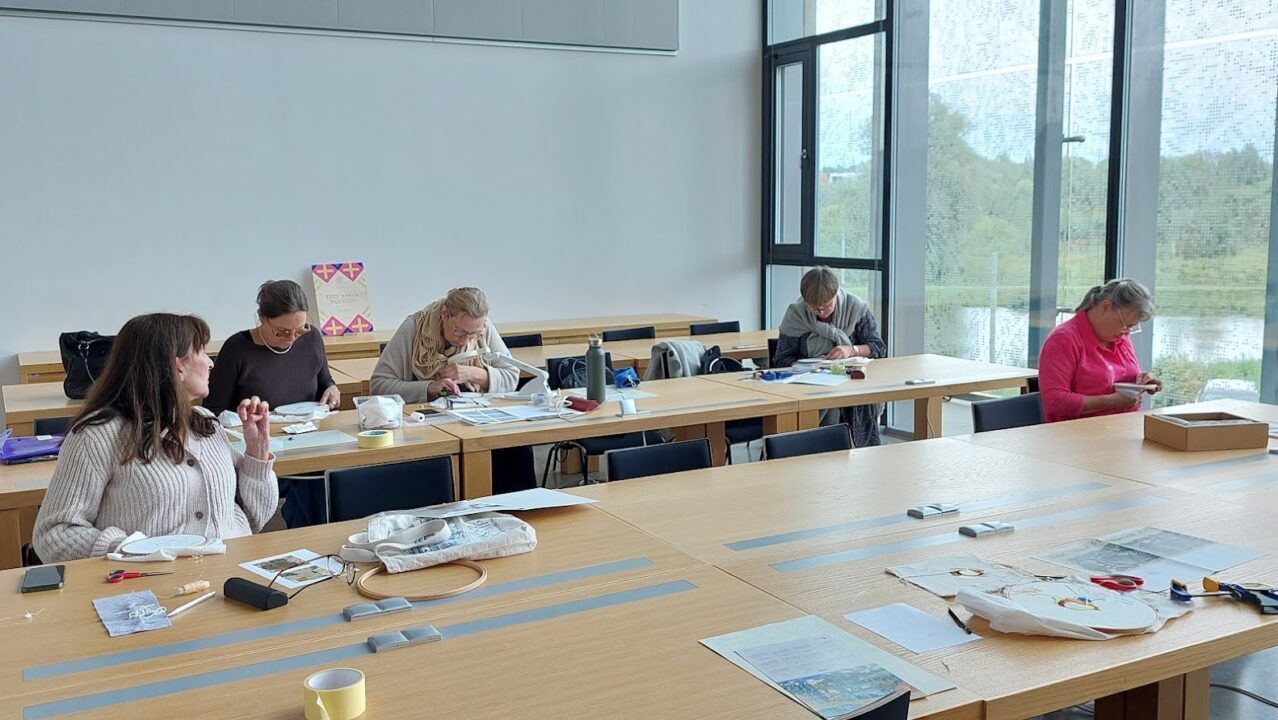
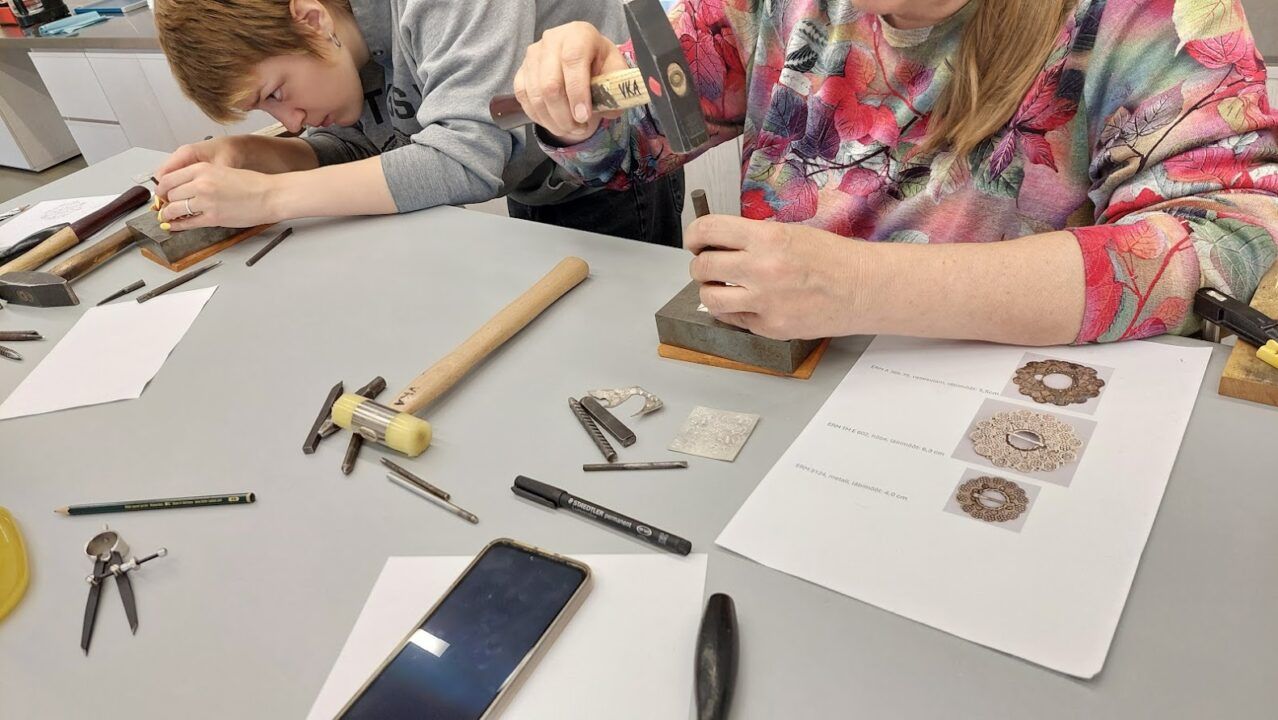
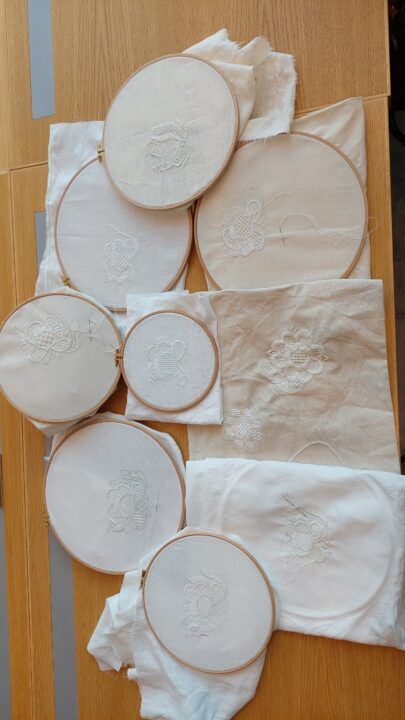
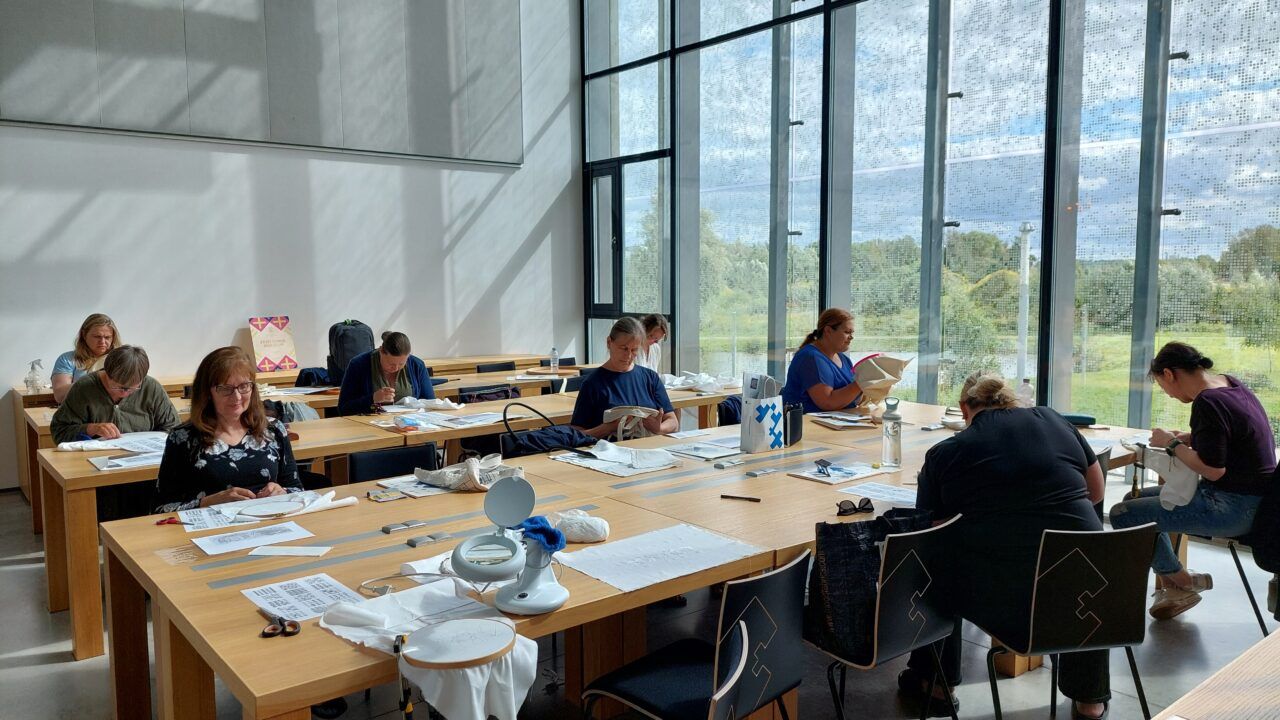
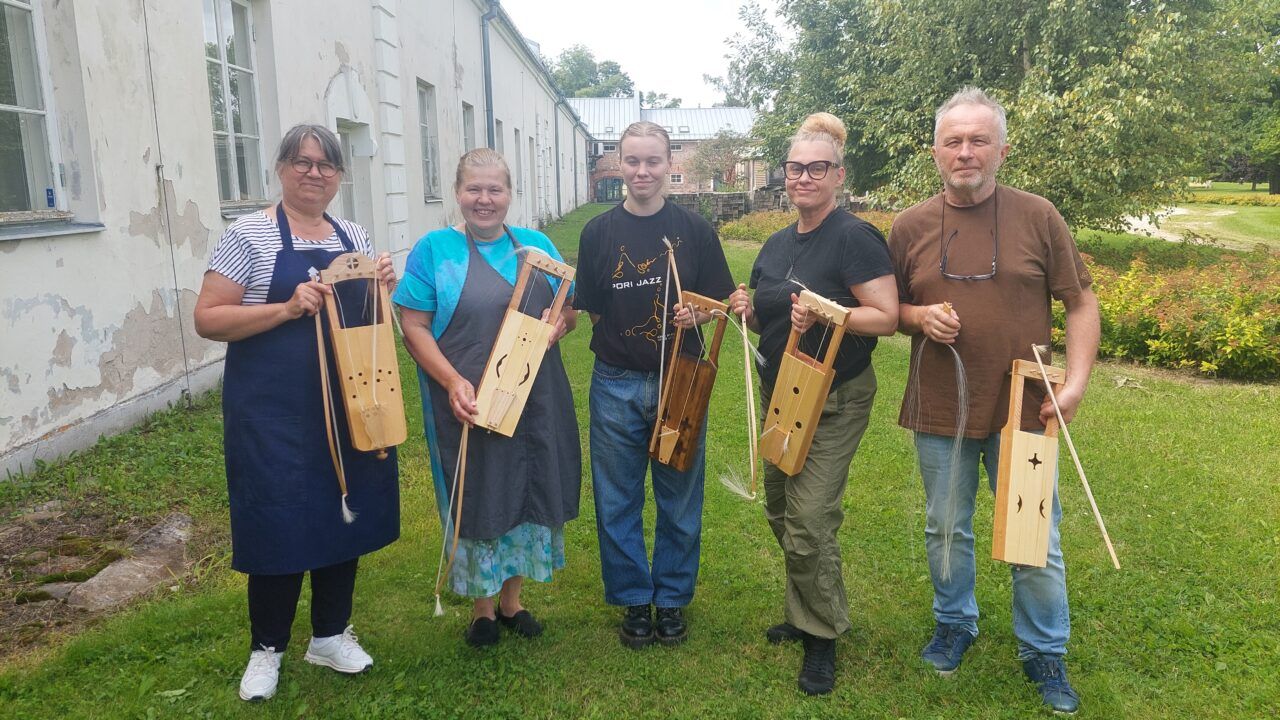
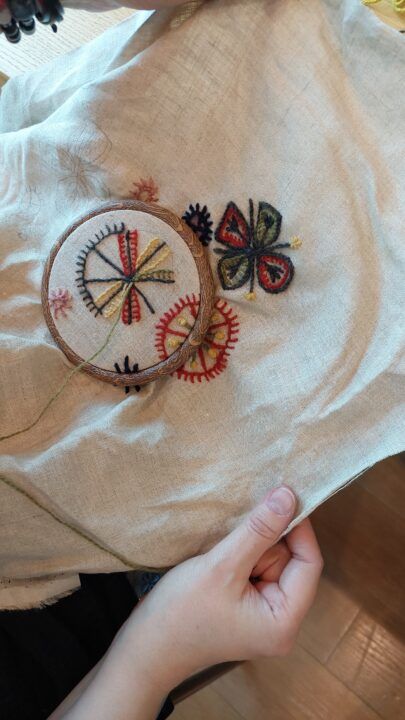
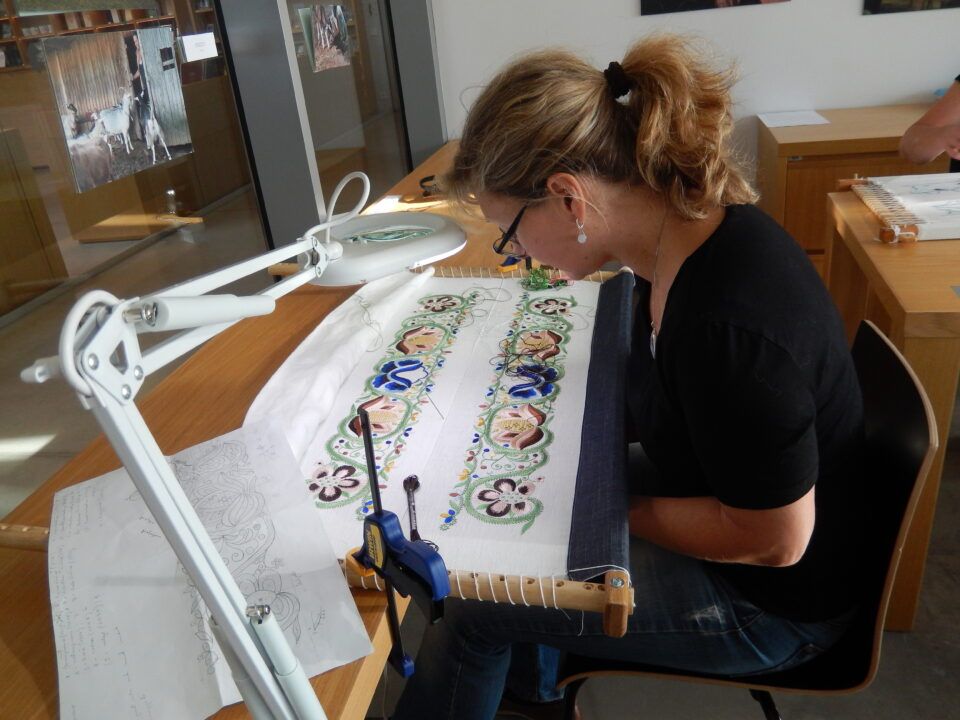
Passing on heritage skills through workshops provides an opportunity to experience and learn traditional knowledge in a practical way.
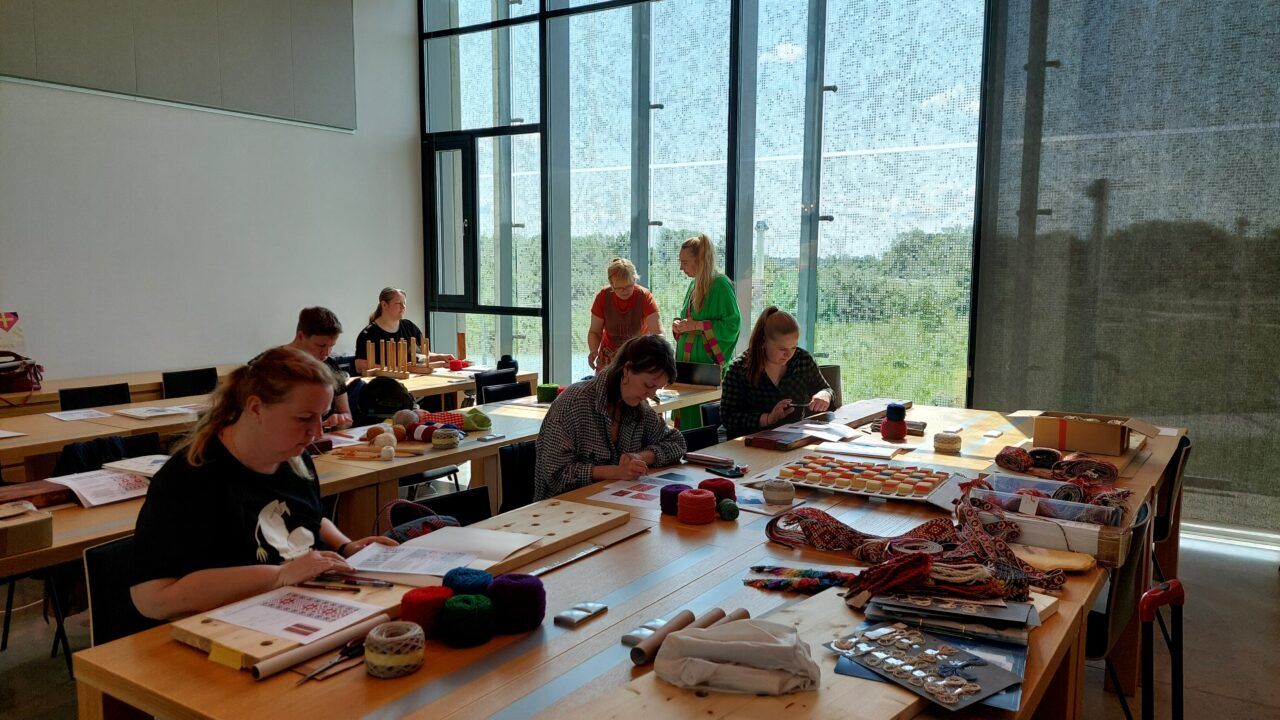
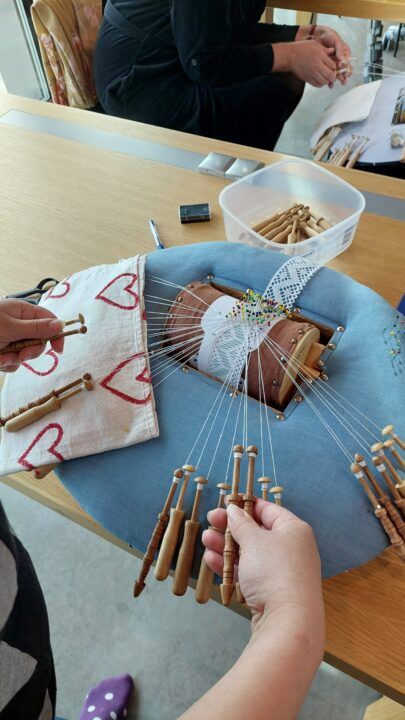
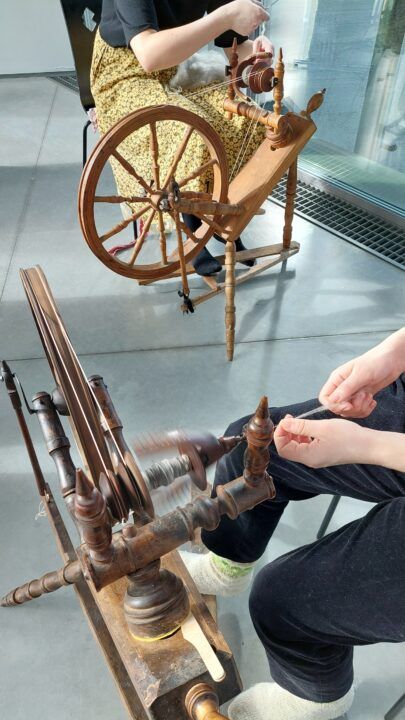
Folk Costume School
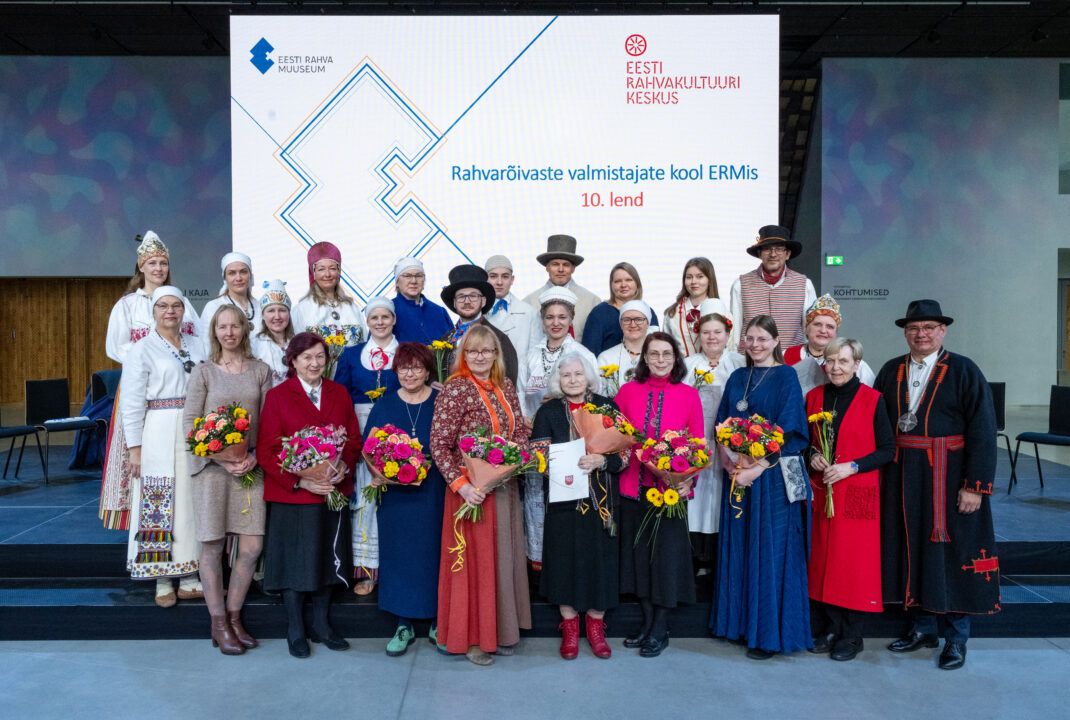
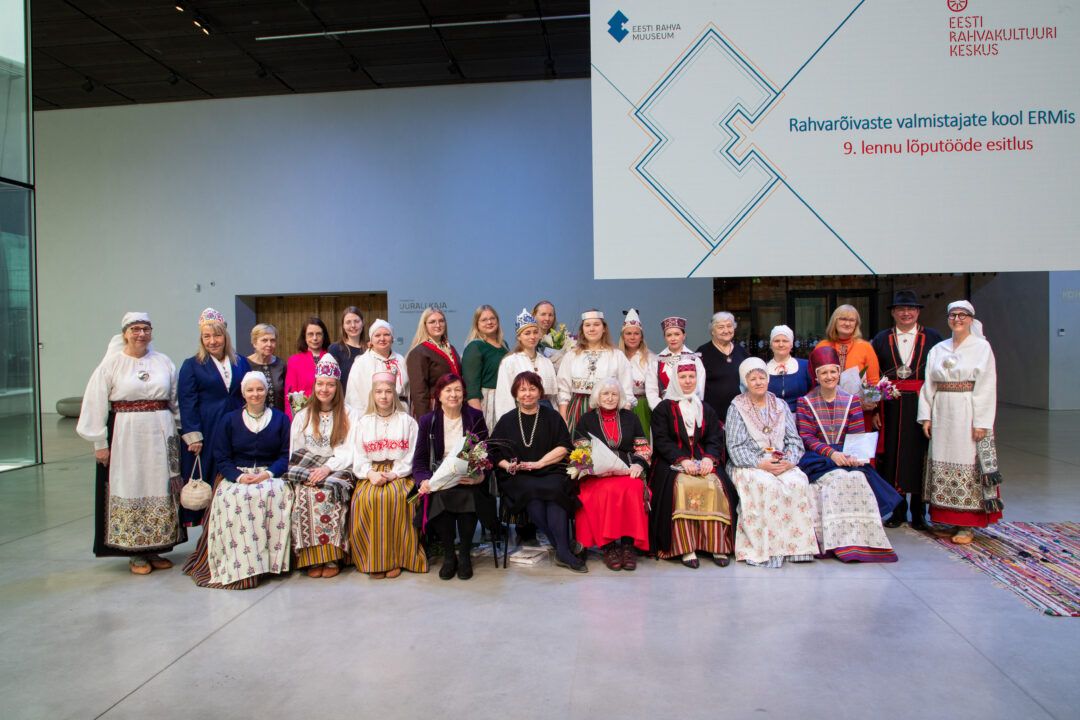
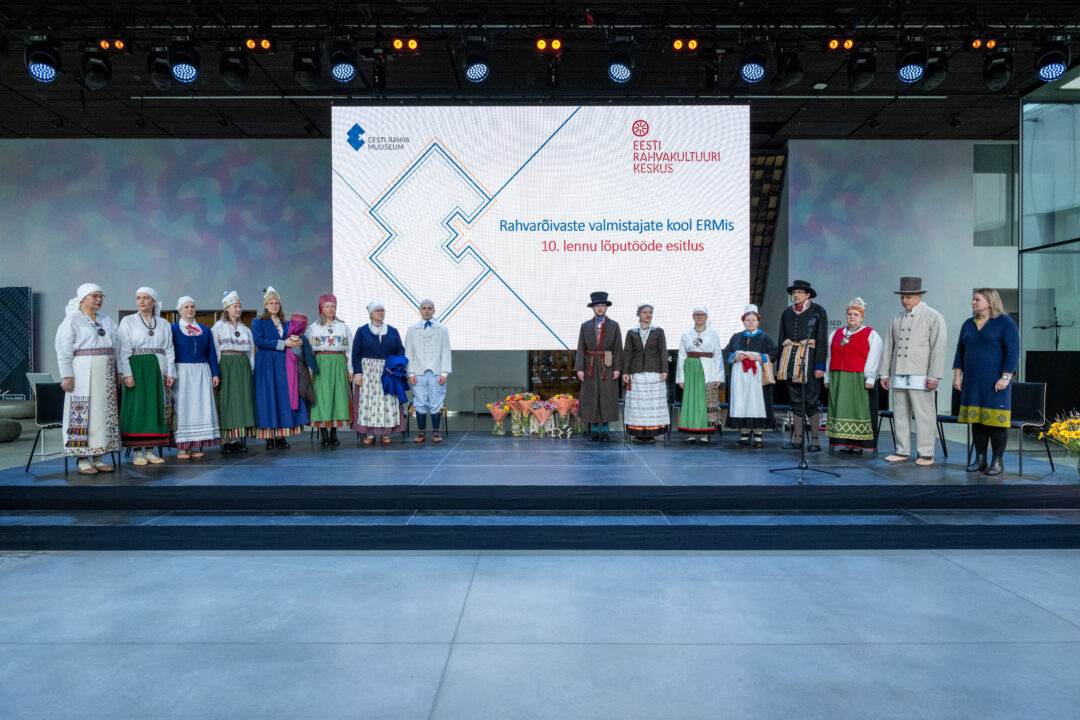
Organising the work of the Folk Costume Makers’ School is one of the tasks of the information centre. In 2023, 35 years had passed since the training of folk costume makers began. During the Singing Revolution and the restoration of the nation-state, the search for one’s roots became especially important, and more and more people wished to acquire a folk costume from their home region. For this reason, the Folk Costume Makers’ School was established in Tallinn in 1988 under the Folk Culture Centre, with the aim of training people knowledgeable about the folk costumes, history, and culture of their own region. With its rich collections of folk costumes and related archival materials, as well as its researchers, the Estonian National Museum became a cooperation partner of the Folk Culture Centre. 2005. From 2005 onward, folk costume makers began to be trained at ERM, and since 2013 the programme manager has also come from ERM. At the same time, the school was renamed the Folk Costume Makers’ School at the Estonian National Museum. 2025. In 2025, the tenth cohort completed its two-year training programme, and the eleventh cohort began its studies (programme manager Age Raudsepp; from 2025, Külli Valk).
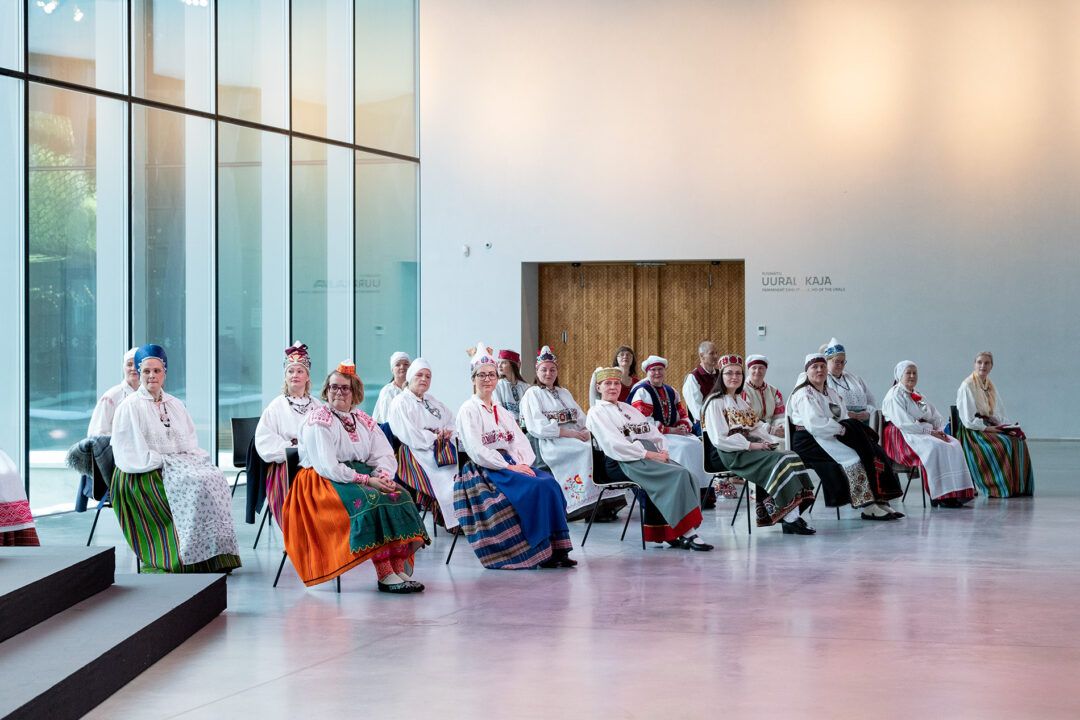
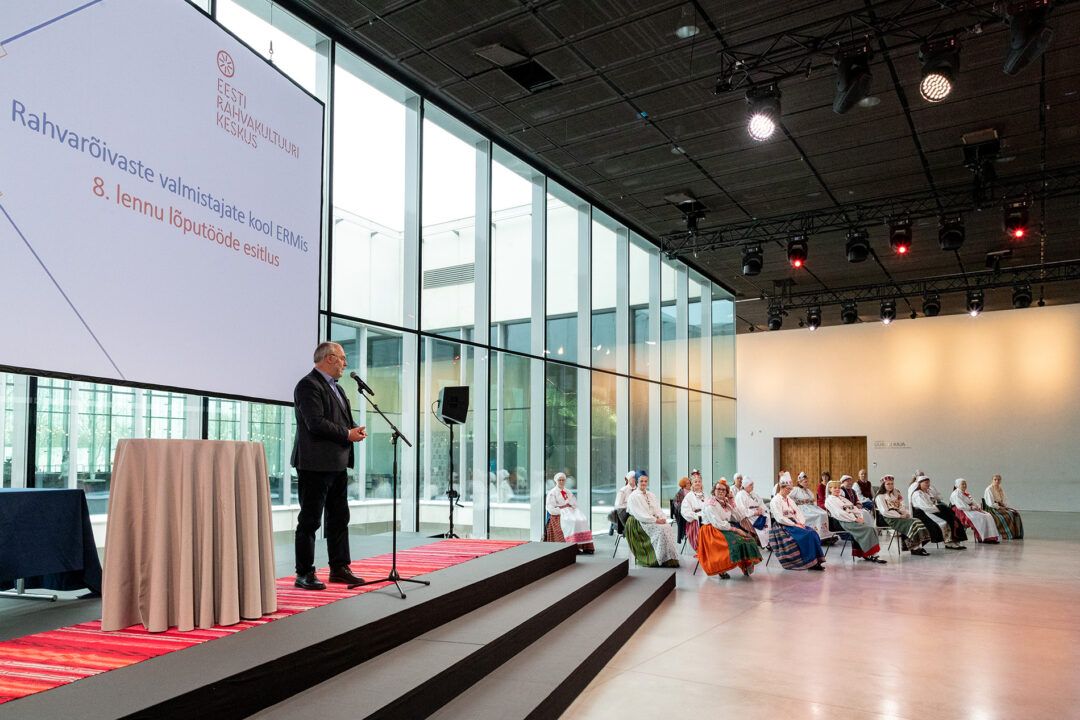
ERM at the Song and Dance Celebration
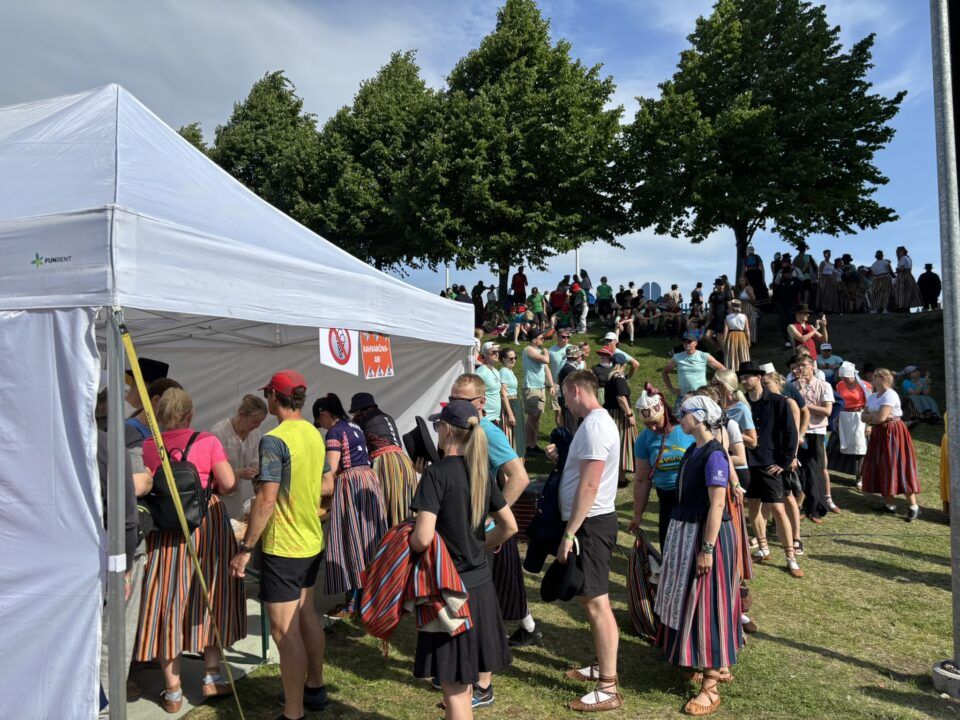
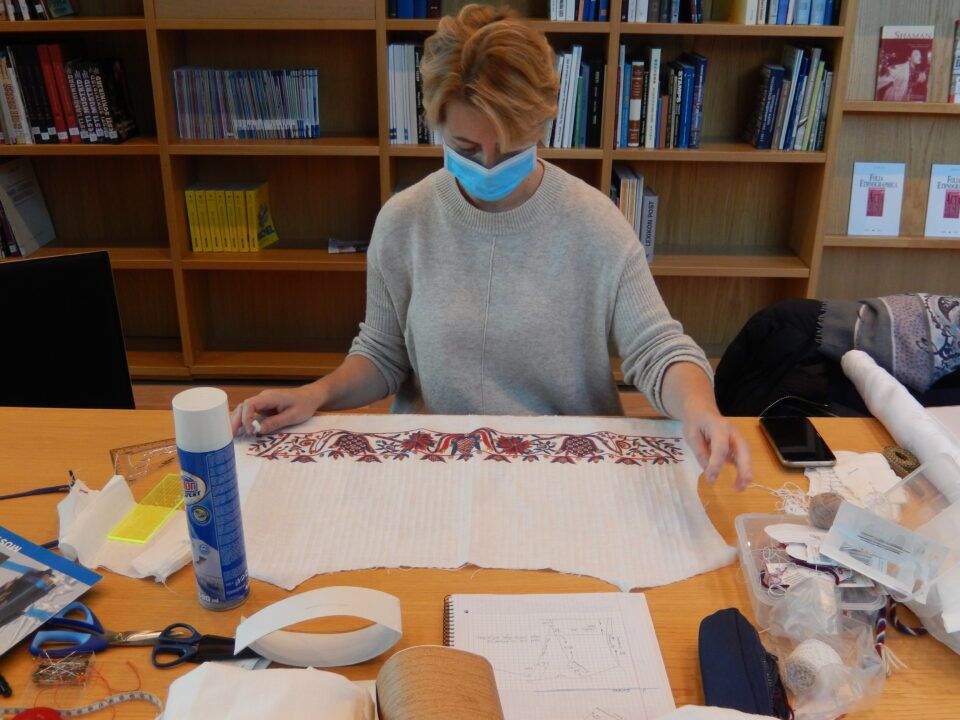
The Song Celebration and folk costumes are inseparably connected; the full beauty and diversity of folk costume comes into view especially in the dance stadium and beneath the song arch. The rich folk costume heritage preserved in ERM’s collections allows participants in the celebration to wear garments closely based on historical peasant dress—clothing like that worn by our ancestors at the time of the first General Song Celebration.
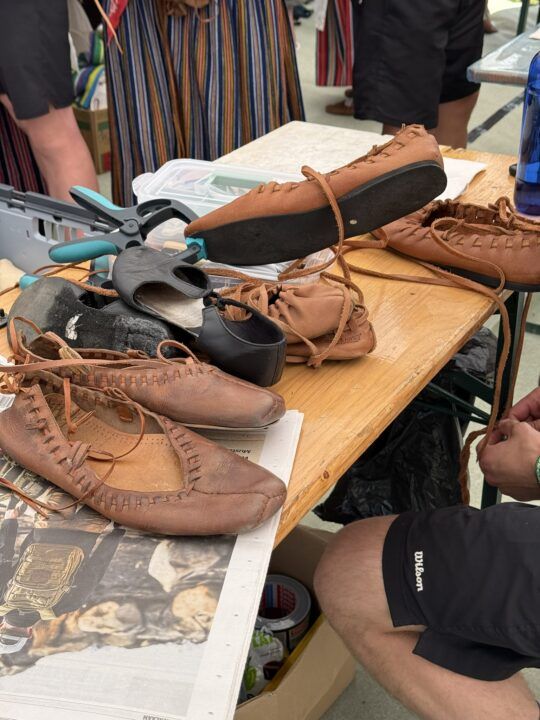
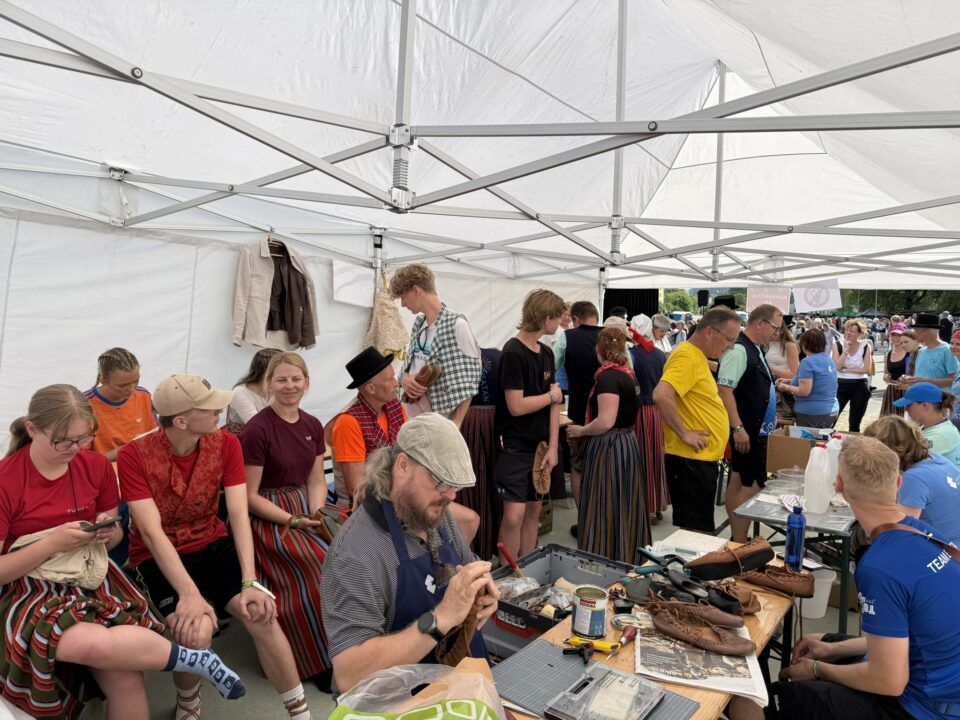
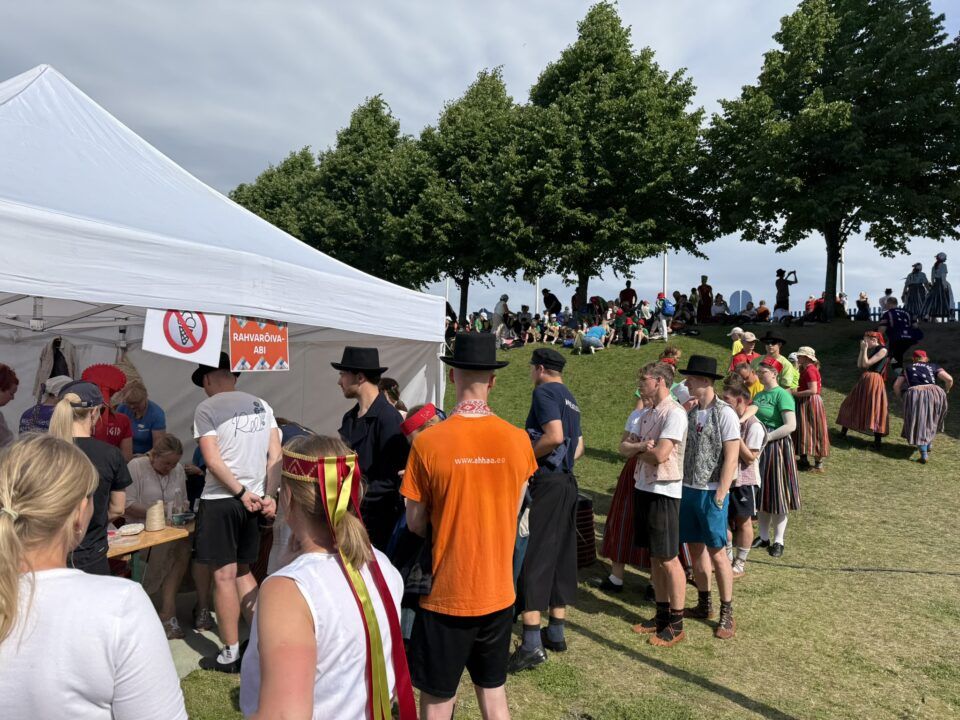
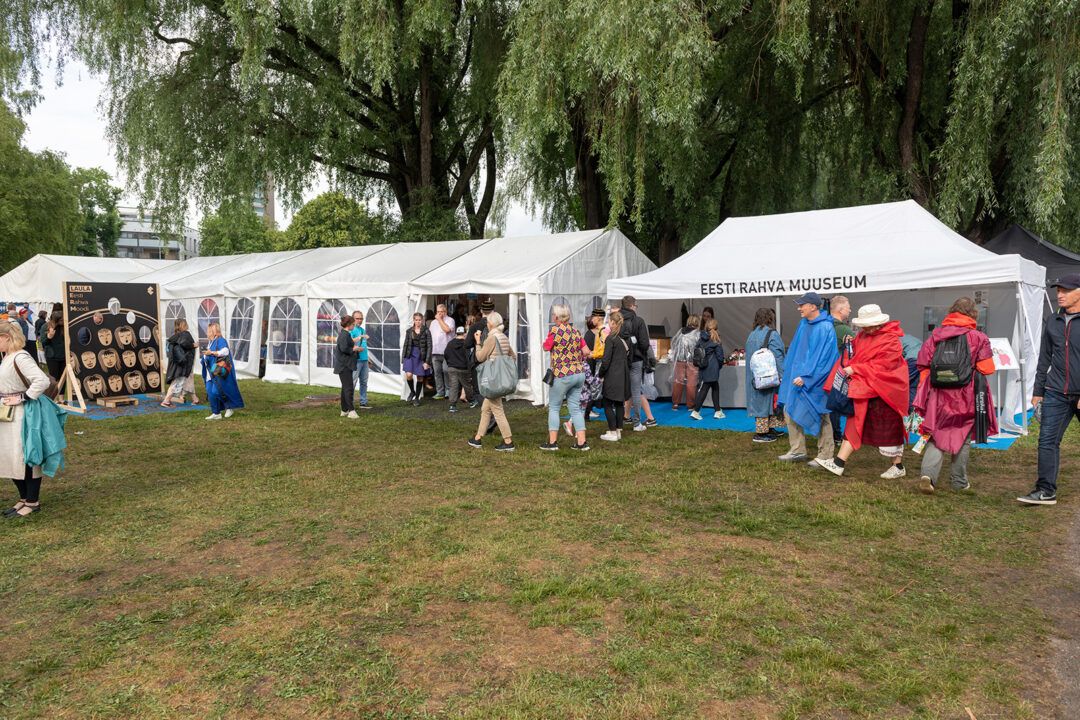
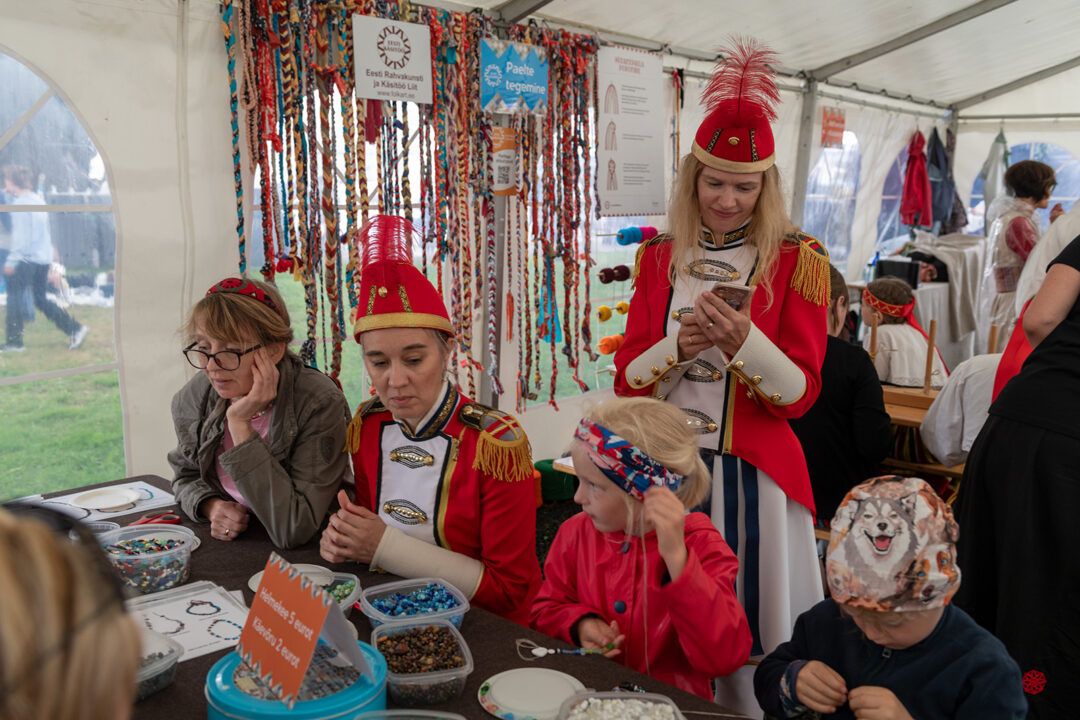
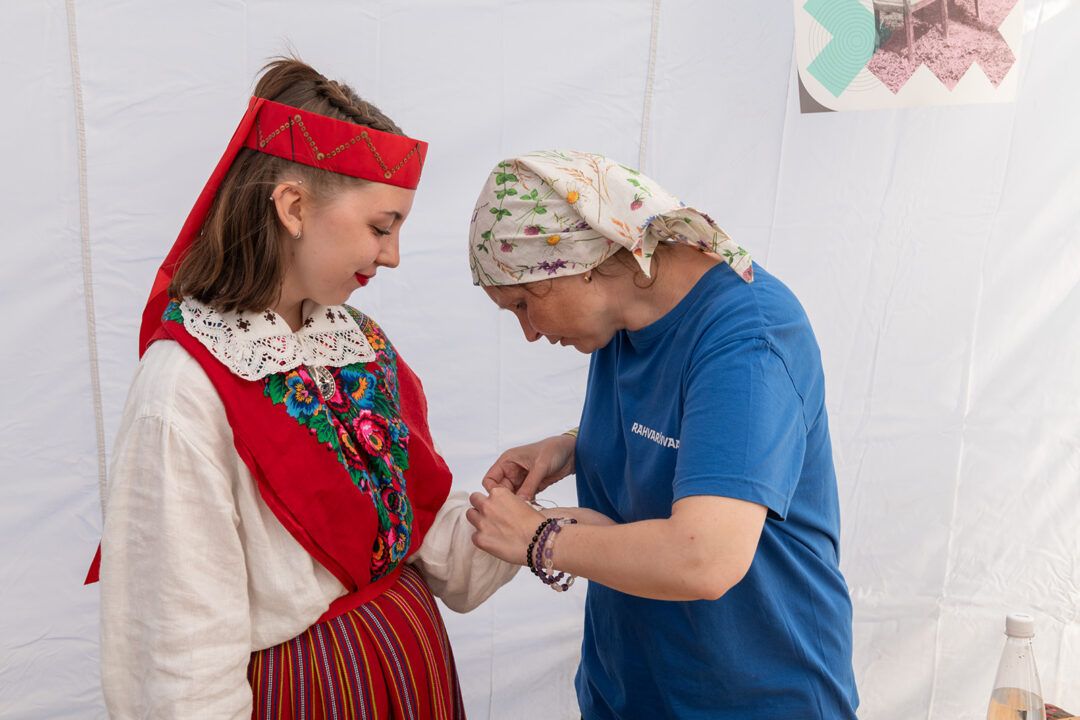
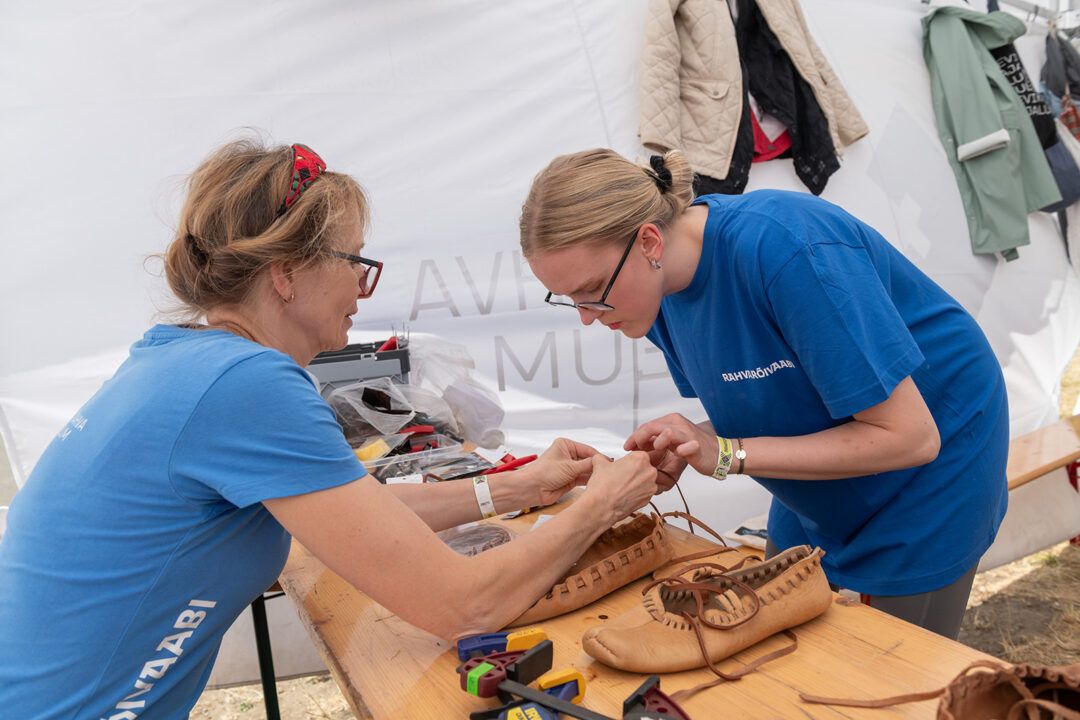
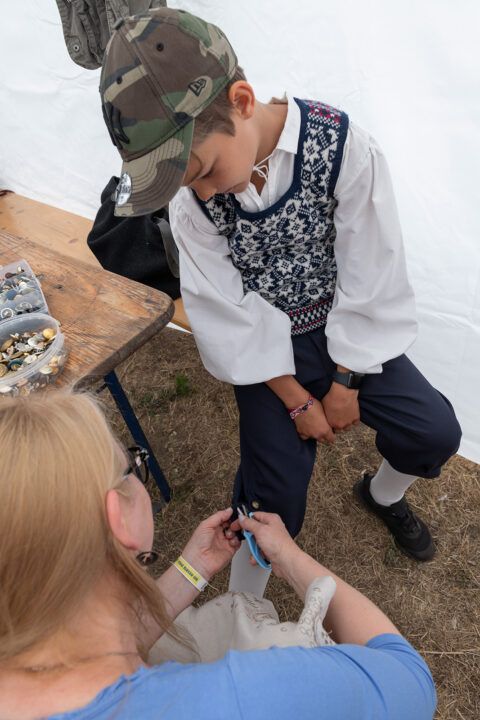
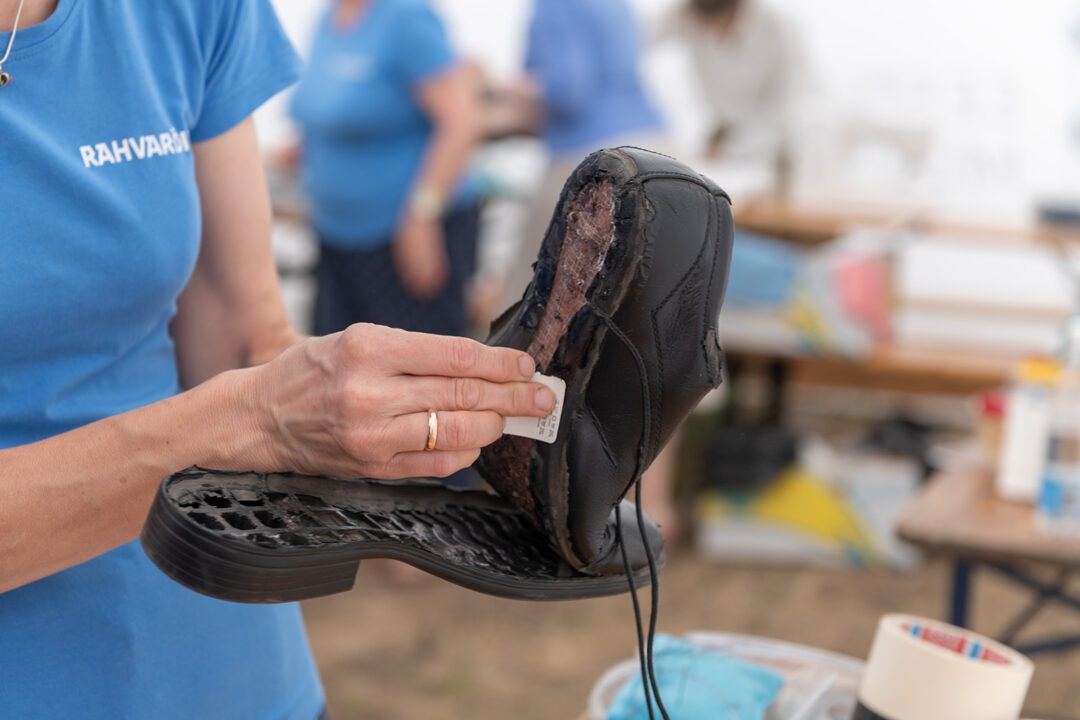
During the celebration, ERM offers dancers all-round assistance with repairing, arranging, and cleaning folk costumes. At the Song Festival Grounds, in ERM’s handicrafts tent, visitors can also learn various handicraft techniques under the guidance of master craftspeople.