The Estonian National Museum is a cultural history museum with an ethnological focus. Its aim is to reflect everyday life and culture as a way and mode of living, taking into account its temporal, spatial, and social diversity. The museum focuses on Estonian culture, alongside other Finno-Ugric peoples. The ENM has been—and will likely remain in the future—one of Estonia’s main centres for ethnology, both in research and in teaching. The University of Tartu’s ethnology programme has always depended to a large extent on the museum’s collections and people.
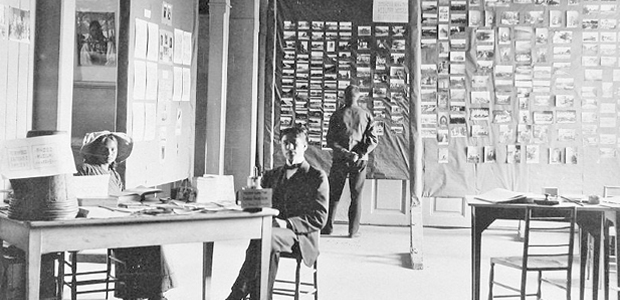
1909. The museum, founded in Tartu in 1909, was dedicated to the memory of Jakob Hurt, our greatest collector of folklore and antiquities, in order to preserve his legacy. It was given the name “Eesti Rahva Muuseum” (the Estonian National Museum), which in today’s terms would correspond to “the Estonian national museum.” The founders’ plan of action was so all-encompassing that the new institution could just as well have been called the Estonian Museum (cf., for example, the British Museum, the Russian Museum).
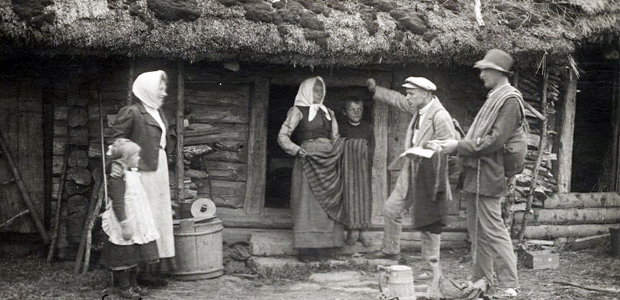
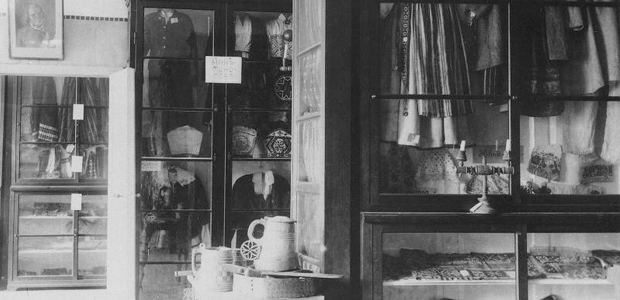
The main emphasis was placed on material heritage (“these primarily depict the customs of ordinary people,” as it was explained). As in many other European countries at the time, the top priority was to record the old, disappearing peasant culture. Alongside this, other things were also valued: cultural-historical objects (“which help us form a picture of our country’s cultural progress”) and archaeological finds (“stone, bronze and iron objects found in the ground, etc.”), as well as “old coins, old books and manuscripts, important papers relating to our country” (i.e., historical documents).
Kavatseti asutada raamatukogu, kus igast eesti raamatust leiduks vähemalt üks eksemplar, kunstikogu, mis sisaldaks “pilte, mis tegija ehk sisu poolest meie maaga ühenduses on”, fotoarhiiv jmt. Lühidalt – ERMist pidi saama eesti kultuuri kõige täielikum varamu.
They planned to establish a library holding at least one copy of every Estonian book, an art collection containing “images connected with our country either by their creator or by their subject,” a photographic archive, and more. In short, the ENM was meant to become the most comprehensive repository of Estonian culture.
History
1909
- The founding of the Estonian National Museum in Tartu
1911-1913
- Height of the Period of Collection
1913
- The city of Tartu provided the museum with premises on Gildi Street for its use
1922
- The post of director of the museum was created and the first salaried director, Ilmari Manninen from Finland, was appointed
- The Raadi Manor building (formerly owned by the von Liphart family) was made available to the ENM
- The ethnographic collections were moved to Raadi
1923
- The first exhibition opened at Raadi, in seven rooms
1924
- The first questionnaires were sent out to schools
1925
- Volume 1 of the Yearbook was published
1927
- A permanent exhibition opened at Raadi
- J. Hurt’s folklore collections returned to Tartu from Helsinki and became the foundation of the Estonian Folklore Archives; K. Krohn, who had safeguarded the collections, was named the ENM’s first honorary member
1928
- A display of Finno-Ugric folk culture was added to the permanent exhibition
1931
- A network of correspondents was established
1940
- The ENM was divided into an ethnographic museum and the Estonian Literary Museum. The museum’s new name became the State Ethnographic Museum of the Estonian SSR
1944
- The Raadi Manor building was damaged by fire; the area remained under the control of the Soviet military for decades
- The museum moved to the former courthouse on Veski Street
1950-1951
- The collections were partly destroyed
1959
- The 1st competition for collecting ethnographic reference materials was held
1961
- The production of ethnographic films began
1965
- Annual expeditions to Finno-Ugric peoples began
- A conservation and restoration unit was established within the collections department, originally called the restoration laboratory
1968
- A storage facility at Riia 27 (in St Paul’s Church) was made available to the museum
1972
- The first folk art album was published
1976
- The organisation of scholarly days (research days) began
1977
- The H. Moora Research Day began
1984
- A storage facility on Sõbra Street (in St Alexander’s Church) was taken into use
1988
- The name Eesti Rahva Muuseum (Estonian National Museum) was restored
1993
- The first issue of Pro Ethnologia was published
- A design competition was held for a new ENM building, planned for a plot in central Tartu. A jury formed by the Association of Estonian Architects selected the concept design Põhja Konn (Northern Frog) by Pärnu architects Ra Luhse and Tanel Tuhal from among more than 30 entries
1994
- The exhibition building and the permanent exhibition “Estonia. Land, People, Culture” opened
- The Friends of the Estonian National Museum Society was founded
1995
- The second floor of the exhibition building was completed, with three halls for temporary exhibitions
1996
- The Riigikogu decided that the new ENM building would be constructed after the completion of the Estonian Academy of Music and Theatre and the Art Museum of Estonia
1998
- The first volume in the Estonian National Museum Series (a series of scholarly monographs) was published
1999
- The first early-career researchers’ conference “Voices of Ethnology” was held
2000
- Construction began on the storage complex at Raadi
2001
- Restoration of Raadi Manor Park
2002
- Renewal of the permanent exhibition “Estonia. Land, People, Culture” began
- The ENM’s research work was evaluated as “good” by an international expert committee
2003
- It was decided to build the ENM’s new main building at Raadi
2004
- The first Tartu Visual Culture Festival took place: the anthropological and documentary film festival MaailmaFilm (WorldFilm)
- The Raadi storage buildings were completed (total storage area 4,400 m²)
2005
- An international architectural competition was launched for the ENM’s new building; 108 entries were submitted
- The Folk Costume Makers’ School began operating
2006
- The winners of the architectural competition were architects Dan Dorell, Lina Ghotmeh and Tsuyoshi Tane (DGT Architects) with the concept design “Memory Field” (Mälestuse väli)
- A cooperation agreement was signed between the ENM and the Estonian Academy of Sciences
2007
- The first issue of the internationally oriented journal Journal of Ethnology and Folkloristics was published
- The ENM joined Europeana, the European digital library
- The ENM’s network of photo correspondents was founded, and the photo collection could thereafter also be expanded via the web portal “Estonian Moments” (Eesti hetked)
2008
- The ENM Building Foundation was established
- A research project began to document Estonian industrial enterprises
- The 80th anniversary of the ENM’s Finno-Ugric department was marked with the exhibition and catalogue “Auasi. In the Footsteps of Estonian Ethnologists…” (Auasi. Eesti etnoloogide jälgedes…)
2009
- The ENM celebrated its 100th anniversary on 14 April
- As part of a participatory campaign, nearly fifty people gifted the ENM a description of their day
- The Estonian Postal Museum merged with the ENM
- On the ENM’s initiative, the marking of parish boundaries began across Estonia
2010
- Heimtali Museum merged with the ENM. The ENM’s research work was again positively evaluated by an international expert committee. The ENM’s collections became publicly accessible via the web-based MuIS (Museum Information System), the ENM’s rug portal, and the ESTER library catalogue
- A department of local cultures was established at the ENM as an advisory centre for county museums
- The first open-curatorship exhibition took place
2011
- Responsibility for building the ENM was taken over by State Real Estate Ltd (Riigi Kinnisvara AS)
- The Estonian ethnographic film series began publication
2012
- The Government of the Republic of Estonia decided to begin construction of the ENM’s new building
- The Folk Culture Advisory Centre was established as a separate unit
2013
- The cornerstone of the ENM’s new building was laid
- The collections of Tartumaa Museum were merged with the ENM
2014
- Sweden’s Crown Princess Victoria and Prince Daniel visited the ENM and presented the museum with the Nordiska Museet’s collection of Estonian ethnographic objects
- The ENM received a new logo
- The Marje Õunpuu Memorial Fund was established under the Estonian National Culture Foundation
- The archive of Endel Tulving arrived at the ENM
2015
- The ENM took the lead in a nationwide joint museum project in the framework of Estonia 100 (Eesti Vabariik 100)
2016
- The ENM’s new building opened, along with the new permanent exhibitions “Encounters” (Kohtumised) and “Echo of the Urals” (Uurali kaja)
2017
- The largest folk costume exhibition to date opened in the temporary exhibition hall: “Regarded as a norm, perenially worn” (Rahvarõivas on norm. Igal aastaajal)
2018
- ENM Theatre began operating; its first production was “Seven Brothers, or the Ural Seagull” (Seitse Venda ehk Uurali Kajakas), staged in the Finno-Ugric exhibition area
- President of the Republic of Estonia Kersti Kaljulaid hosted guests of Estonia’s 100th anniversary reception at the ENM
- The ENM hosted the 51st annual conference of ICOM ICME (the international committee for museums and collections of ethnography)
- The first nationwide schools programme “Time Travel” (Ajarännak) took place, with 8,400 students travelling to the year 1918
2019
- The ENM’s Yearbooks became available to read online
- After the move to the new building, all ENM collections were reopened to researchers; large-scale digitisation projects of object collections and archives began
- Karoliine Korol’s collection on plastics conservation (See igavene plastmass!), was published
- The ENM organised the annual conference of NEMO, the Network of European Museum Organisations
2020
- The fairy-tale exhibition “Once Upon a Time” (Elas kord) opened at the ENM
- The largest contemporary everyday-culture collecting initiative took place, focusing on COVID-19
- For the first time, the ENM served as the competition centre for Rally Estonia, a round of the FIA World Rally Championship
2021
- The 7th World Congress of Finno-Ugric Peoples was held at the ENM
- The first collections provenance research project—“Finno-Ugric Dialogues. Collections and Collecting” (Soome-ugri dialoogid. Kogud ja kogumine)—was completed
2022
- The ENM hosted the European Museum of the Year Award (EMYA) conference and awards gala
- Work began on creating a digital bibliography of Estonian ethnology
- The Young Archaeologists’ Club began operating
- A display case “Glory to Ukraine” (Au Ukrainale) opened in the permanent exhibition; materials were collected on war refugees (“Friend of Ukraine” / Ukraina sõber and “Be Prepared! My Story of Coping in a Crisis” / Ole valmis! Minu kriisis hakkama saamise lugu)
2023
2024
2025
- The Estonian National Museum was added to UNESCO’s International List of Cultural Property under Enhanced Protection (enhanced protection)
2026
- The Estonian National Museum marks ten years in its own home